 Reviews


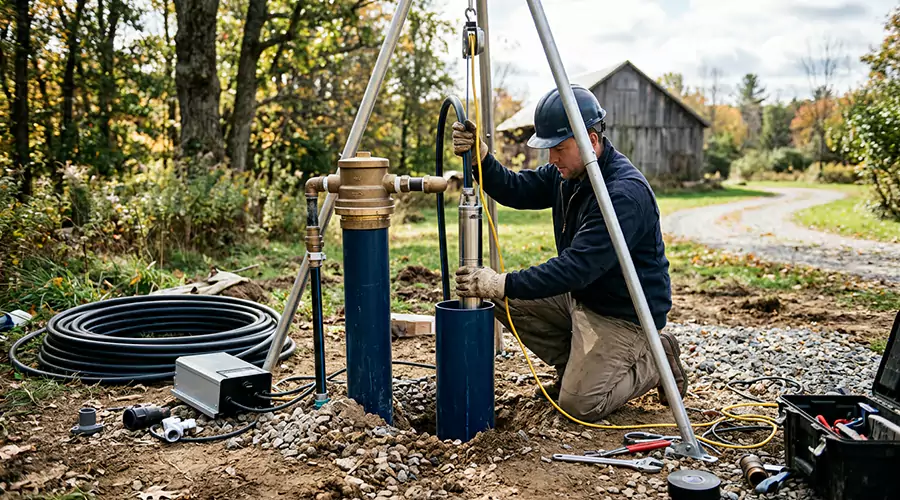
A DIY well pump installation is realistic for shallow jet pumps and pressure tanks while deep submersible work belongs to professionals. The full professional job averages $1,899 with most homeowners spending $975 to $2,824 in 2026.
One number splits the whole project. Submersible pumps serve wells deeper than 25 feet while shallow well jet pumps handle water tables within 25 feet of the surface.
This guide covers the DIY-friendly half in full steps and explains the professional half honestly. The pressure tank section applies to every well in America.
Know Your Well Before Buying Anything
Water well pump installation splits by depth before any other decision. The 25-foot line decides your pump type and your project difficulty at the same time. Find your well's depth on the original drilling report or your county's well records.
Shallow wells keep everything above ground. A jet pump sits in the basement or a well house and pulls water up through a suction line. Deep wells reverse the design since a submersible hangs down in the water and pushes upward, and submersibles are self-priming and build pressure about 30% faster.
Two more numbers finish the shopping list. Match the new pump's horsepower to the old one and match the voltage to your circuit. A photo of the old pump's data plate answers both at the store.
Insider tip: Insist any quote spells out whether drop pipe and wire and a new check valve are included because low bids re-add them later.
Where DIY Ends on This Project
Honesty draws the line before the first wrench. Pulling or installing a submersible combines a load that can exceed 200 pounds with 240 volts around standing water, which makes it a licensed-pro job. Shallow systems carry none of those hazards.
The DIY column holds three jobs. Installing or replacing an above-ground jet pump is a wrenches-and-fittings project. Pressure tank replacement is plumbing you can see and touch. Pressure switch and gauge swaps finish the list.
The pro column holds the rest. Anything suspended in the well casing and any new electrical circuit and any well past 100 feet of depth belongs there, since a pump at 100 feet can be pulled by hand while 400 feet requires a mechanized hoist rig.
Tools and Parts
The shallow-system tool list stays ordinary. Everything specialized costs under $60 combined. Gather the full kit before draining anything.
- Pipe wrenches and channel-lock pliers for the fittings.
- Teflon tape and pipe dope for threaded joints.
- Voltage tester: Verify power is off at the pressure switch before touching wire.
- Tire pressure gauge for the tank's air charge.
- Bicycle pump or compressor to adjust that charge.
- A quality foot valve for jet systems. The foot valve is the first thing that fails and the last thing people think about so buy the durable bronze version.
- New check valve since backflow protection guards the whole system.
- Bucket and towels because drained systems still hold water in the low spots.
Installing a Shallow Well Jet Pump
A jet pump swap runs in one afternoon with ordinary skills. The pump mounts near the pressure tank and connects to the suction line from the well. Priming is the step that separates success from a burned seal.
- Kill the power and drain: Turn off the breaker and verify with a tester, then open the lowest faucet and drain the system fully before disconnecting.
- Swap the pump: Unbolt the old unit and set the new one on the same pad. Connect the suction line and the discharge with fresh tape on every thread.
- Check the voltage setting: Many jet pumps are dual-voltage and often ship pre-set to 230V, so confirm the selector matches your circuit before wiring.
- Prime before power: Never start a jet pump dry. Remove the priming plug and fill the pump body and suction line completely with water. Replace the plug snugly.
- Start and watch: Pumps pulling near their 25-foot limit can take longer to prime, so give the system a few minutes to catch before assuming failure.
Insider tip: A pump that loses prime overnight has a leaking foot valve or a suction-line air leak. Fix the valve first because it fails first.
Deep Well Pump Installation
Deep well pump installation is a suspended-load project performed through a 6-inch hole. Understanding the process helps you supervise it even though the work belongs to pros. The pump hangs from its own plumbing the entire time.
The assembly builds at the surface. Installing a pump in a well means attaching the pump to drop pipe with the electrical wire taped alongside, and new drop pipe adds $1 to $3 per foot of depth. A torque arrestor and safety rope join the stack on quality jobs.
Then gravity takes over carefully. Deep well water pump installation is a two-person minimum because the crew lowers the growing assembly section by section until the pump reaches its set depth. Reuse temptations deserve refusal here since a contractor who reuses 15-year-old drop pipe is setting up a second failure and a second extraction bill.
Insider tip: Ask the crew to record the pump's set depth and the static water level on your invoice. Those two numbers make every future service call cheaper.
Well Pump and Pressure Tank Installation
The tank is the half of every well pump and pressure tank installation that homeowners can own completely. It works indoors with no well access needed. One rule governs the entire job.
Set the air before the water. Well pressure tank installation starts with the precharge because this step must be done before adding water to the tank. Find the tire-style air valve on top and check the factory charge with a pressure gauge since most tanks ship at 38 PSI.
The rule has exact numbers. The well pressure tank setup ends at 2 psi below the pump's cut-on pressure, which means a 30/50 system reads 28 psi and a 40/60 system reads 38. Precision matters in both directions because an overpressurized tank holds less water and won't signal the well pump to switch on.
Placement and plumbing finish the job. Water well pressure tank installation happens indoors near where the well line enters the house. Plumbing a well pressure tank runs through a tank tee, which is one fitting that stacks the pressure switch and gauge and drain valve together at the tank's inlet.
Insider tip: Size up when torn between tanks. Rapid cycling is the number-one cause of early motor failure and a larger tank reduces daily starts significantly. A matched well pump pressure tank setup can cut daily starts from over 200 down to 25 to 40.
Wiring and the Pressure Switch
The switch is the system's brain and its wiring deserves respect. A correct water well pump set up matches the switch settings to the tank's air charge exactly. Mismatched numbers cause the short-cycling that kills motors.
Work the electrical side by the book. Power runs from the breaker through the pressure switch to the pump, and incorrect wiring can damage the motor instantly so hire a licensed electrician if you're not comfortable. Grounding is non-negotiable around water.
Verify the settings before closing the cover. The switch's cut-in and cut-out numbers print inside the cover or on the box. Confirm they match the tank precharge math from the section above.
Start Up and Test the System
Startup is a listening test with a stopwatch. Restore the breaker and open a faucet and watch the gauge. The finished well pump setup proves itself in the first ten minutes.
Run the three checks in order:
- Watch the pressure build: The pump should run until the gauge reaches cut-out pressure and then stop cleanly.
- Check every joint while pressurized: Inspect all connections for leaks under full pressure.
- Time a cycle: Run water until the pump kicks on and time it, because a proper installation runs at least one minute between cycles.
Fast clicking fails the test. A waterlogged tank causes rapid cycling that can burn out the motor in 3 to 6 months, so recheck the precharge the same day.
What Installation Costs in 2026?
Well pump installation pricing follows depth and scope. The DIY shallow lane costs parts alone while deep professional work scales with every foot. The table maps 2026 honestly.
| Scenario | 2026 cost |
|---|---|
| DIY jet pump swap | $230 to $1,200 for the unit plus fittings |
| DIY pressure tank install | Tank price plus about $40 in parts |
| Pro labor on standard jobs | $250 to $1,000 at $45 to $150 per hour |
| Full professional replacement | $975 to $2,824 typical |
| Deep well premium | Roughly $500 to $1,000 added per 100 feet |
Timing rounds out the budget. Most replacements take four to eight hours and weekend emergencies add the standard surcharge you can dodge with early warning signs.
Maintenance After Day One
The install's lifespan gets decided in annual ten-minute checkups. Air escapes every tank slowly and each lost psi shortens the motor's life. Three habits protect the whole investment.
- Check the precharge yearly: A low air charge destroys a pump through rapid cycling, and the tire-gauge check takes two minutes with the power off and tank drained.
- Listen for cycle changes: A pump starting more often than last season is reporting a problem early.
- Replace the sediment filter on schedule: Sand and grit are the enemies of the pressure switch and the tank bladder.
A properly charged tank pays compound interest since correct air pressure can extend pump life by up to 7 years.
Conclusion
Depth decides everything about this project. Jet pumps and pressure tanks reward careful DIY while submersibles demand professional muscle and licensed wiring. The 2-psi-below-cut-in rule runs every system regardless of who installs it. This week check your tank's air charge with a tire gauge. Two minutes with the power off tells you whether your current setup is aging gracefully or cycling itself to death.
FAQs
How do I find my well's depth without records?
A well contractor can sound the well in minutes. Neighbors' wells on the same aquifer also give a strong estimate.
Can I convert a jet pump system to a submersible?
Yes and it's common on marginal shallow wells. The switch usually means adding or replacing pipe plus professional pump setting.
Why does my new pump run but deliver no water?
Jet pumps lose prime or pull air when drought drops the water below the foot valve. Reprime first and check the water level second.
What pressure switch setting should I use?
Whatever your fixtures were designed around. Most homes run 30/50 or 40/60 and the tank precharge must follow the choice.
Does the pump need its own breaker?
Yes. A dedicated circuit sized to the motor's specs is standard and often code-required.
How long should the whole system last?
Pumps typically run 10 to 15 years while tanks last similar spans when the air charge stays maintained.